Reviewing Good Days on My Mind Retro SVG for Stitchers
As a designer who spends half my life digitizing and the other half stitching, I have learned that not every pretty graphic translates well to thread. When I first pulled Good Days on My Mind Retro SVG from my asset library, I was not just looking at a cute phrase; I was evaluating its potential as a viable machine embroidery design for my current batch of client projects. The retro aesthetic is everywhere right now, but executing it in embroidery requires a keen eye for line weight and spacing. This review breaks down how this specific file holds up when moved from the screen to the hoop.
First Impressions and Visual Personality
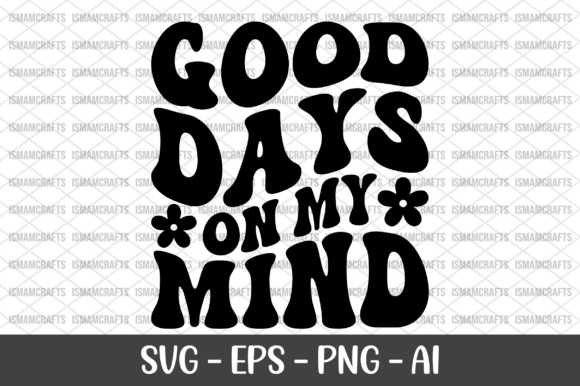
The immediate mood of Good Days on My Mind Retro SVG is nostalgic and warm. It captures that specific seventies-inspired vibe that is dominating the T-Shirt Designs market, but with a cleanliness that suggests it was built with modern production in mind. The typography feels bubbly yet structured, which is crucial for embroidery. If letters are too thin, they disappear into the fabric; if they are too thick, they become stiff cardboard patches on a soft garment. This design strikes a balance that suggests it will stitch out with clarity, provided you choose the right materials.
From a Graphics perspective, the layout is compact. This is a significant advantage for small business owners who need to maximize fabric usage or work with smaller hoops. It does not sprawl unnecessarily, meaning it can fit comfortably on a left-chest pocket, a cuff, or the center of a baby onesie without requiring massive re-digitizing efforts.
Real-World Application: The Tote Bag Test
To truly understand the value of an embroidery file, you have to imagine it on a physical product. I recently prepared a custom order for a local boutique needing a set of branded canvas tote bags. I selected Good Days on My Mind Retro SVG as the primary visual element. Why? Because tote bags are high-visibility items. They walk around the city, acting as mobile billboards for the wearer’s mindset.
In this scenario, the retro font offered a friendly, approachable aesthetic that aligned perfectly with the boutique’s eco-conscious branding. When stitched onto heavy cotton canvas, the design needed to hold its shape. I anticipated using a dense fill stitch for the larger letter forms to ensure coverage, while relying on a clean satin stitch for any finer outlines or decorative elements within the SVG structure. The result was a handmade product that felt premium rather than mass-produced. Customers often touch embroidered items before buying them, and the texture of this design invites that interaction.
Versatility Across Product Lines
Beyond totes, this design has strong potential in several other categories. For sweatshirt embroidery, the retro style complements the cozy, casual nature of fleece and French terry fabrics. It works exceptionally well as a personalized gift idea for mental health awareness months or simply as a cheerful daily reminder. I can also see it functioning effectively as an embroidered patch design. If you digitize it with a border, it becomes a versatile iron-on or sew-on accessory that customers can apply to jackets or backpacks later.
For Etsy sellers and craft business owners, versatility is key to profitability. This single design can be marketed across multiple niches: baby embroidery for nursery decor, holiday embroidery for spring-themed gifts, or even kitchen textiles like aprons and tea towels. The positive message transcends seasonal trends, making it a evergreen asset in your digital library.
Technical Considerations for Embroiderers
While the visual appeal is high, practical execution requires attention to detail. Here is where my experience as a reviewer comes in. You must consider stitch density and fabric type. Retro fonts often have rounded edges. If the density is too high on a stretchy fabric like a jersey t-shirt, the garment will pucker. Conversely, if the density is too low on a textured fabric like toweling, the background fabric will show through, ruining the crispness of the letters.
I recommend testing Good Days on My Mind Retro SVG on scrap fabric first. Do not skip this step. Check how the thread colors interact with your base material. High contrast is usually best for readability, but tonal variations can create a subtle, sophisticated look for high-end boutique branding. Also, pay close attention to the small details. In retro typography, the connections between letters or the inner counters of letters like "O" and "A" can be tight. Ensure your machine can handle these areas without thread breaks or bird nests.
Navigating Fabric and Hoop Constraints
Where should you use this design carefully? Avoid placing it on extremely thin or slippery fabrics without a robust stabilizer strategy. A cut-away stabilizer is often safer for garments that will undergo frequent washing, such as custom apparel or baby clothes. For caps and curved surfaces, the width of the design matters. Since this SVG is relatively compact, it likely fits standard cap frames, but always measure your specific hoop size against the design dimensions before starting.
Dark fabrics present another challenge. If you are stitching light thread on dark fabric, you may need an underlay stitch or a backing layer to prevent the dark fabric from peeking through the lighter threads. This is especially true for the thinner strokes in the retro lettering. Always do a test run in black and white mockups to visualize contrast issues before committing to expensive thread.
Commercial Viability and Brand Value
For commercial embroidery projects, the perceived value of the finished product is paramount. A well-stitched retro design signals trend-awareness and quality. It builds customer trust because it shows that the maker understands current aesthetics. When used in printable mockup previews for your online shop, Good Days on My Mind Retro SVG creates an emotional connection with potential buyers. It is not just a design; it is a feeling of optimism.
However, remember that this is a digital download. The package includes AI, SVG, EPS, and other vector files, which are excellent for scaling and editing before digitizing. But note that these are not necessarily pre-digitized embroidery files like DST or PES. You may need to use embroidery software to convert these vectors into stitch data, or ensure you have the correct digitized version if provided separately. Always confirm licensing terms before selling finished items. Most designers allow commercial use of finished physical products, but restrictions may apply to reselling the digital files themselves.
Final Designer Notes
- Test First: Always stitch a sample on the actual fabric you plan to use for the final product.
- Check Contrast: Ensure your thread color stands out against the fabric texture, especially for detailed lettering.
- Stabilize Properly: Match your stabilizer type to the fabric weight and garment usage.
- Verify Files: Confirm that the included SVG and AI files are compatible with your digitizing software if you plan to edit the design.
- Think Long-Term: Consider how the design will hold up after washing. Tight stitches on stretchy fabrics may cause distortion over time.
In conclusion, Good Days on My Mind Retro SVG is a strong contender for your next project. It offers the right blend of trendy aesthetics and practical layout for embroidery. Whether you are creating a tote bag design for a local market or a small shop product for your online store, this graphic provides a solid foundation for high-quality, emotionally resonant handmade goods. Just remember to respect the technical limits of your machine and materials, and you will produce a finished product that customers love to wear and share.